Email: info@massfilling.com Tel: +86 133 5803 8863
Email: info@massfilling.com Tel: +86 133 5803 8863
As a mechanical engineer with over a decade in manufacturing, I've always been fascinated by the everyday objects that seem
simple but hide layers of engineering ingenuity. Take the humble ballpoint pen—something most of us use without a second thought.
Yet, behind its smooth glide across paper lies a symphony of materials science, precision machining, and automated assembly.
In this blog post, I'll dive deep into how a ballpoint pen is manufactured, from raw materials to the final product. We'll cover
the history, the key components, the step-by-step process, quality controls, and even some thoughts on sustainability. By the end,
you'll appreciate why producing billions of these pens annually is a feat of modern engineering.
The ballpoint pen didn't just appear out of thin air; it's the result of decades of innovation. The concept dates back to the
late 19th century, but it was Hungarian journalist László Bíró who patented the first practical ballpoint pen in 1938. Frustrated
with fountain pens that leaked and
smudged, Bíró noticed how newspaper ink dried quickly and envisioned using a tiny ball to dispense it evenly. He collaborated
with his brother György, a chemist, to develop a viscous ink that wouldn't leak but flowed under pressure.World War II accelerated
its adoption—pilots needed a pen that worked at high altitudes without leaking.The British government licensed Bíró's design, and
soon after, companies like BIC and Parker refined it for mass production. Today, BIC alone produces over 50 million pens daily,
showcasing how engineering scaled a niche invention into a global staple. The ballpoint pen's success lies in its reliability: no
dipping, no spilling, just consistent writing.
Before we get into the process, let's talk materials. A typical ballpoint pen consists of plastic, metal,
and ink—each chosen for durability, cost, and performance.
· Plastic Components: The barrel, cap, and grip are usually made from polypropylene or polystyrene.
These thermoplastics are lightweight, moldable, and resistant to chemicals. They're derived from petroleum,
melted, and shaped via injection molding.
· Metal Parts: The ball is often tungsten carbide, a hard alloy that's wear-resistant and precisely spherical.
The socket holding the ball is brass or stainless steel, machined for a perfect fit to allow rotation without leaking.
· Ink: Ballpoint ink is a thixotropic paste—thick when still but fluid under shear (like from writing pressure).
It's made from dyes or pigments, solvents (like benzyl alcohol), resins for binding, and additives for viscosity.
Black ink might use carbon black, while colors come from organic pigments.
· Other Elements: Springs for retractable mechanisms are steel, and clips might be metal or plastic. Everything is
engineered for longevity; a good pen can write for kilometers.
Sourcing these materials involves global supply chains. Tungsten comes from mines in China, plastics from refineries
worldwide. Engineers optimize for cost—pens sell for pennies—so materials must be cheap yet reliable.

How Are Ballpoint Pens Made? Inside a Ballpoint Pen Factory - ttxpens
This diagram shows the exploded view of a typical retractable ballpoint pen, highlighting key components like the
refill, spring, and barrel.
Manufacturing a ballpoint pen is a high-volume, automated affair. Factories use assembly lines where robots and machines
handle most tasks, producing thousands per hour. Let's break it down into phases.
The process starts with the ink, the pen's lifeblood. In large batch tanks, compounders mix raw ingredients under computer
control. Pigments are ground into fine particles (micron-sized) to prevent clogs. Solvents dissolve resins, and additives
like fatty acids adjust viscosity—aiming for 10,000 to 20,000 centipoise, so it doesn't drip but flows when the ball rolls.
Mixing happens in heated or cooled vats, sometimes for hours, to ensure homogeneity. Quality checks measure pH, viscosity,
and color. Once ready, the ink is filtered and stored in reservoirs. This step is crucial; poor ink leads to skips or blobs.
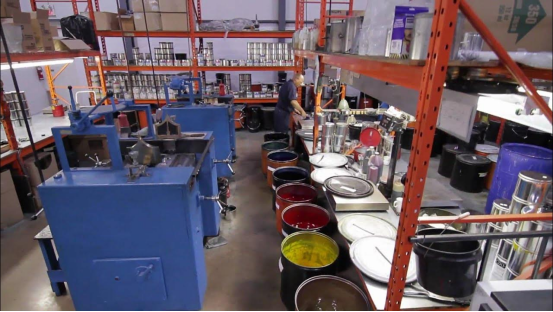
How Ink Is Made
Here, you can see a factory setup for mixing inks, with various colored pigments in barrels ready for formulation.
The ballpoint tip is a marvel of precision engineering. The ball, about 0.5-1mm in diameter, starts as tungsten carbide powder
sintered into spheres. These are polished to a mirror finish—roughness under 0.01 microns—to ensure smooth rolling.
The socket, or housing, is brass rod cut into small pieces, then stamped and drilled. A machine presses the ball into the socket,
crimping the edges to hold it while leaving a tiny gap for ink flow (about 0.001mm). Channels inside the socket feed ink to the
ball. This requires micromachining; any imperfection causes leaks.
In high-end pens, tips might be nickel-silver for corrosion resistance. China dominates tip production, having mastered the tech
after years of imports.
Most pen parts are plastic, made via injection molding. Pellets of polypropylene are heated to 200-250°C in a hopper, then injected
into multi-cavity molds under high pressure (up to 2000 psi). The mold, often steel with 32-64 cavities, cools the plastic in seconds,
ejecting ready barrels or caps.
For the ink tube (refill), extrusion is used: molten plastic is pushed through a die to form long tubes, cut to length, and one end sealed.
Retractable mechanisms involve molding buttons and cams. Molds are designed with CAD software, ensuring tolerances of 0.01mm for snug fits.
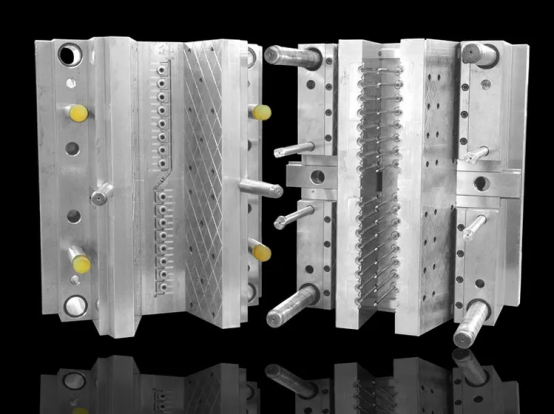
Pen Mold Supplier - Injection Mold, Mould Mass Technology
This image illustrates a typical injection mold for pen barrels, showing the cavities where plastic is shaped.
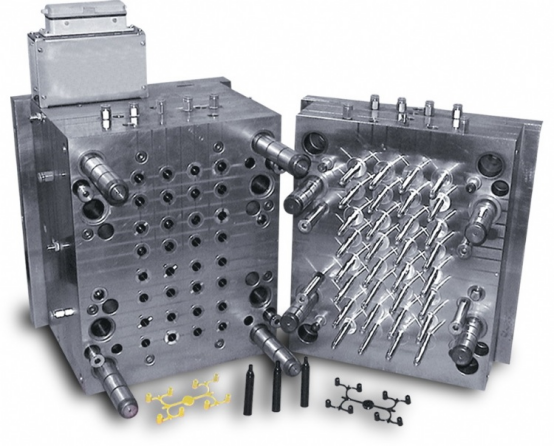
Another view of a complex mold setup, complete with ejected pen parts for scale.
Assembly is where it all comes together on automated lines. First, the tip is attached to the ink tube. Ink is injected into the tube using
needles—often under vacuum to avoid air bubbles. A small grease plug seals the open end, preventing drying.
The refill goes into the barrel. For retractables, a spring is added, then the mechanism clicked in. Caps, clips, and grips are snapped or
glued on. Machines use vibratory feeders to orient parts, robots for placement, and ultrasonic welding for bonds.
Speed is key: lines run at 100-200 pens per minute. Sensors detect defects, ejecting faulty units.
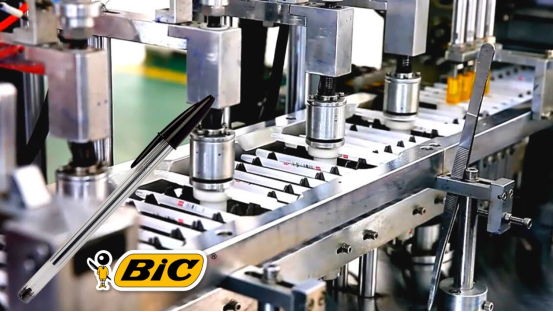
Ever Wondered How BIC Ballpoint Pens Are Made?! Join us on this FanTECHstic Factory Tour!
An assembly line in action, with robotic arms placing components into pens.
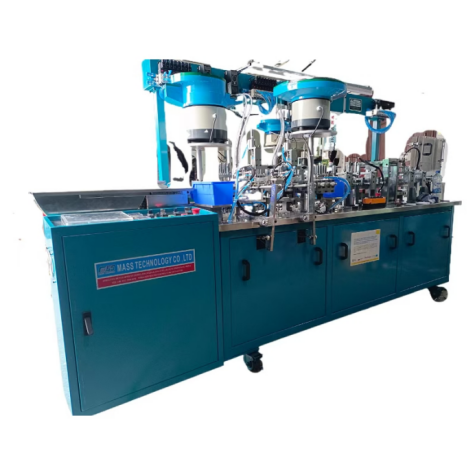
Automatic Ball Pen Ballpoint Pen Assembly Machines Production Line - Assembly Machine, Pen Assembly Machines A full automated assembly
machine for ballpoint pens, highlighting the integration of multiple stations.
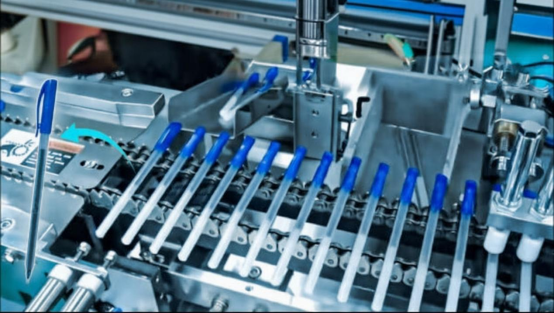
How Pens Are Made In Factory | Pen Manufacturing Industry | Ball Pen Production
Conveyor belts moving pen refills during the filling and capping phase.
Many pens get branded. Silk-screen or pad printing applies logos on barrels. For promotional pens, lasers etch designs. This step uses rotary
printers for high throughput.
No pen leaves without rigorous checks. Random samples are tested for writing length (up to 2km), leak resistance, and drop durability. Machines
simulate writing on paper, measuring line consistency. Viscosity tests ensure ink flow; spectrometers verify color.
Engineers use statistical process control (SPC) to monitor variations. Defects like ball misalignment are caught by vision systems. ISO standards
guide this, ensuring 99% reliability.
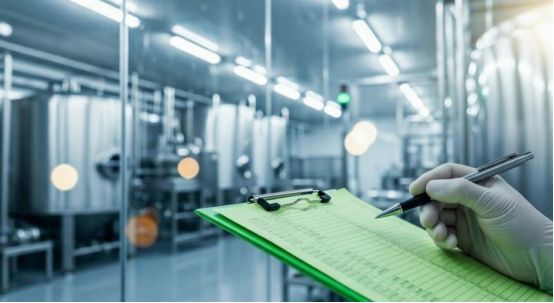
Quality Control Inspection in a Manufacturing Facility Stock Illustration
A quality inspector noting results in a factory setting, emblematic of the final checks.
Finished pens are blister-packed or boxed, often in bulk for efficiency. Automation sorts by color and type. From there, they're shipped worldwide,
with logistics optimized to minimize costs.
Manufacturing pens isn't without impact. Plastics contribute to waste, and ink solvents can be volatile. Many companies now use recycled plastics
or bio-based inks. BIC, for instance, recycles pens through programs. Engineers are exploring refillable designs to reduce disposables.
Future trends include smart pens with sensors or sustainable materials like PLA from corn. 3D printing might customize pens, but mass production
remains king for affordability.
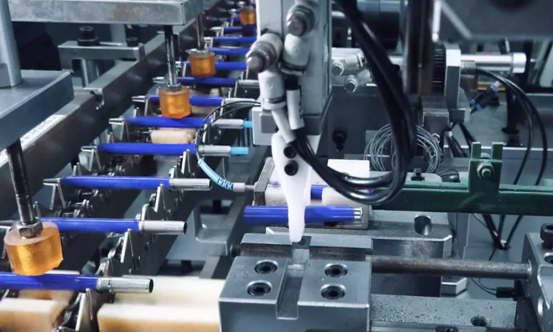
How Are Ballpoint Pens Made? Inside a Ballpoint Pen Factory
An overview of the manufacturing process, capturing robotic assembly of pen components.
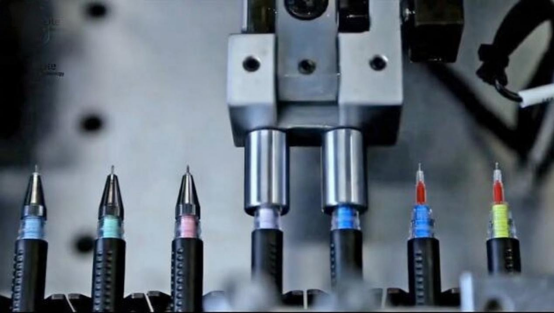
Incredible Mass Production Process of Ball Pen in Factory | Daily Process HD
Colorful pens on an assembly line, showing the variety produced in factories.
From mixing ink to final assembly, manufacturing a ballpoint pen blends chemistry, mechanics, and automation into a product that's both mundane
and masterful. As an engineer, I see it as a testament to how we solve problems at scale—making writing accessible to all. Next time you pick
up a pen, think about the thousands of engineering hours behind it. If you're in manufacturing, share your thoughts in the comments. What's your
favorite pen innovation?
Contact: Linda Ma
Phone: +86 136 1624 7328
E-mail: info@massfilling.com
Whatsapp: 8613616247328
Add: Leyu Development Zones,Zhangjiagang City,Jiangsu
We chat