Email: info@massfilling.com Tel: +86 133 5803 8863
Email: info@massfilling.com Tel: +86 133 5803 8863
Semi-Automatic vs. Fully Automatic Bottle Blowing Machine: Which Suits Your ROI?
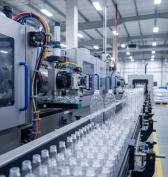
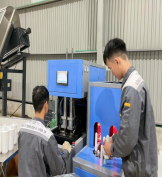
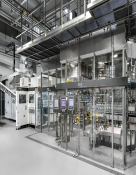
When investing in a PET bottle blowing machine, many buyers start with one simple question:
“How much does the machine cost?”
However, from an engineering and factory operation perspective, this is only the beginning.
A bottle blowing machine is not simply a piece of hardware—it directly affects your factory’s production unit economics, including:
· Output capacity
· Labor dependency
· Energy consumption
· Scrap rate
· Maintenance cost
· Production flexibility
· Long-term scalability
A lower purchase price does not always mean a better investment.
Many manufacturers discover after installation that a low-cost machine can create hidden operating expenses through higher labor requirements, inconsistent quality, and limited production capacity.
The correct approach is to evaluate the Total Cost of Ownership (TCO) and calculate the real Return on Investment (ROI).
This article provides an engineer’s perspective on how to choose between a semi-automatic and fully automatic bottle blowing machine based on actual production requirements.
1. Quick Overview: How Semi-Automatic and Fully Automatic Bottle Blowing Machines Work
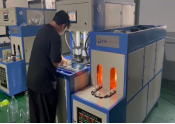
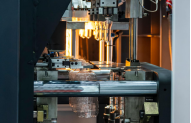
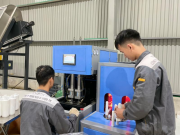
A semi-automatic bottle blowing machine uses a combination of manual operation and automatic blowing technology.
Manual preform heating loading
↓
Manual transfer of heated preforms into mold
↓
Automatic stretching and blowing process
↓
Manual bottle collection
✔ Lower initial investment
✔ Simple machine structure
✔ Easy maintenance
✔ Flexible mold changeover
✔ Suitable for small and medium production
However, because operators are involved in material handling, production efficiency depends more heavily on workforce experience.
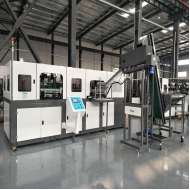
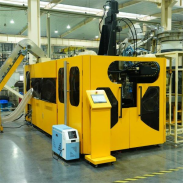
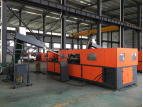
A fully automatic bottle blowing machine integrates the complete production process into one automated system.
Automatic preform loading system
↓
Automatic orientation and heating
↓
Servo or robotic transfer system
↓
Stretch blow molding
↓
Automatic bottle discharge
✔ High production capacity
✔ Minimal human intervention
✔ Stable bottle quality
✔ Lower labor dependency
✔ Easy integration with filling lines
For factories producing millions of bottles per month, automation often creates significant economic advantages.
2. Head-to-Head ROI Analysis: Where Does the Investment Return Come From?
A proper ROI analysis should not only consider machine price.
Engineers normally evaluate three major areas:
1. Capital Investment (CapEx)
2. Operating Cost (OpEx)
3. Long-Term Production Value
· Lower purchase price
· Lower installation requirements
· Smaller factory space requirement
· Lower technical training cost
For companies entering PET bottle production, this reduces financial risk.
However, the lower investment comes with limitations:
· More manual labor
· Lower output
· Limited automation expansion
· Limited automation expansion
Fully Automatic Machine
A fully automatic system requires higher upfront investment because it includes:
· Automatic preform feeding
· Servo control systems
· Advanced heating modules
· Automatic transfer systems
· Conveyor integration
The initial cost is higher, but the equipment provides higher production efficiency and stronger long-term value.
2.2 OpEx: Labor and Production Efficiency
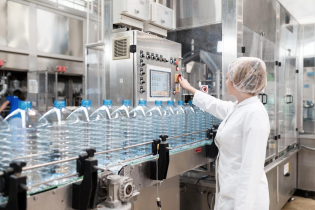
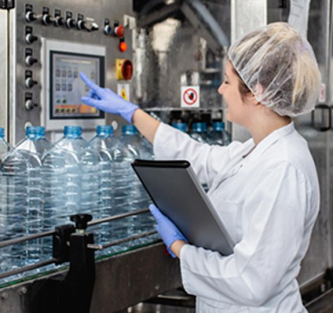
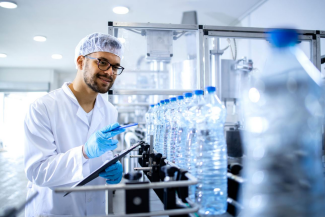
Operating cost is where automation creates the biggest difference.
Machine Type | Typical Labor Requirement |
Semi-Automatic | 1–2 operators per machine |
Fully Automatic | One technician can supervise multiple production units |
For regions with increasing labor costs, reducing manual operation can significantly improve profitability.
Bottle quality depends heavily on:
· Preform heating consistency
· Transfer timing
· Stretch ratio
· Blow pressure stability
Manual transfer may create:
· Temperature variation
· Uneven bottle thickness
· Higher rejection possibility
PLC-controlled systems maintain:
· Accurate heating parameters
· Stable timing
· Repeatable production quality
This reduces material waste and improves production yield.
Energy consumption is another important ROI factor.
Engineers usually evaluate:
· Heating system efficiency
· Compressed air consumption
· Cooling requirements
· Machine idle time
Modern fully automatic machines may include:
· Optimized heating zones
· Servo-driven systems
· Heat recovery solutions
· Intelligent energy management
Although the equipment investment is higher, energy savings become increasingly valuable during continuous operation.
Feature | Semi-Automatic Machine | Fully Automatic Machine |
Initial Investment | Low | High |
Production Capacity | Low-Medium | High |
Typical Output | <2,000 BPH | 3,000–20,000+ BPH |
Labor Requirement | Higher | Lower |
Bottle Quality Stability | Good | Excellent |
Mold Change Flexibility | Excellent | Good |
Automation Level | Basic | Advanced |
Integration With Filling Line | Limited | Excellent |
Maintenance Complexity | Simple | Professional Support Recommended |
Long-Term TCO | Suitable for small volume | Better for large volume |
4. Which Machine Fits Your Business Stage?
The best machine is not always the most advanced machine.
The right choice depends on your production goals.
Choose a Semi-Automatic Bottle Blowing Machine If:
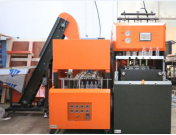
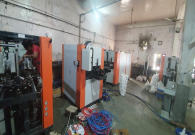
You are:
✔ A startup beverage company
✔ A regional bottled water producer
✔ Testing a new bottle design
✔ Producing multiple bottle formats
✔ Operating below 2,000 BPH production demand
Because semi-automatic machines provide:
· Lower financial pressure
· Faster investment recovery
· Production flexibility
They are especially suitable when market demand is still developing.
Choose a Fully Automatic Bottle Blowing Machine If:
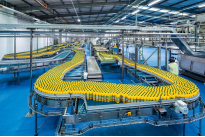
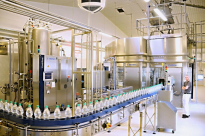
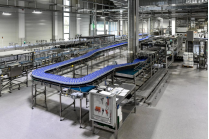
You are:
✔ Operating a high-volume beverage factory
✔ Producing water, CSD, juice, or oil bottles
✔ Running continuous production shifts
✔ Planning inline filling and packaging integration
✔ Targeting 3,000–20,000+ BPH capacity
Because automation provides:
· Higher output
· Lower labor cost
· Better consistency
· Easier expansion
5. The Engineer’s ROI Formula: How to Calculate Payback Period
A simple engineering ROI calculation can be expressed as:
Payback Period=Equipment Cost DifferenceAnnual Savings in Labor + Waste Reduction + Capacity Improvement\textbf{Payback Period}= \frac{\text{Equipment Cost Difference}} {\text{Annual Savings in Labor + Waste Reduction + Capacity Improvement}}
The additional investment in automation should be compared with the value it creates.
Example: Fully Automatic Machine Payback Scenario
A factory upgrades from semi-automatic production to a fully automatic system.
Additional investment:
$200,000
Annual benefits:
· Labor savings: $90,000/year
· Reduced bottle rejection: $40,000/year
· Increased production capacity value: $60,000/year
Total annual benefit:
$190,000/year
Estimated payback period:
200,000÷190,000≈1.05 years200,000 ÷ 190,000 ≈ 1.05 \text{ years}
The investment can potentially be recovered in approximately 14 months.
6. Common Mistakes Buyers Make When Selecting Equipment
A cheaper machine may create higher costs through:
· More operators
· Higher waste
· Lower output
· More downtime
Mistake 2: Buying Excess Capacity Too Early
Oversized equipment may result in:
· Low utilization
· Higher energy costs
· Longer ROI period
The machine should match your real production demand.
Mistake 3: Ignoring Future Growth
A factory today may be different from a factory three years later.
Engineers recommend considering:
· Expected market growth
· Additional production lines
· Automation upgrades
· Future bottle designs
Conclusion: The Best ROI Comes From Matching Technology With Production Goals
From an engineer’s perspective, choosing between a semi-automatic and fully automatic bottle blowing machine is not simply a question of price.
It is a decision about:
· Production scale
· Operating efficiency
· Quality requirements
· Future expansion
A semi-automatic machine provides excellent flexibility and a lower entry barrier for growing businesses.
A fully automatic machine delivers stronger long-term ROI for factories requiring high output, stable quality, and continuous production.
The cheapest machine is not always the most economical choice.
The best machine is the one that creates the highest value throughout its entire service life.
Need a Customized ROI Calculation?
Every factory has different conditions:
· Bottle size
· Production target
· Labor cost
· Energy price
· Factory layout
Contact our bottle blowing machine engineers today for a customized ROI analysis and production feasibility report.
Contact: Linda Ma
Phone: +86 136 1624 7328
E-mail: info@massfilling.com
Whatsapp: 8613616247328
Add: Leyu Development Zones,Zhangjiagang City,Jiangsu
We chat